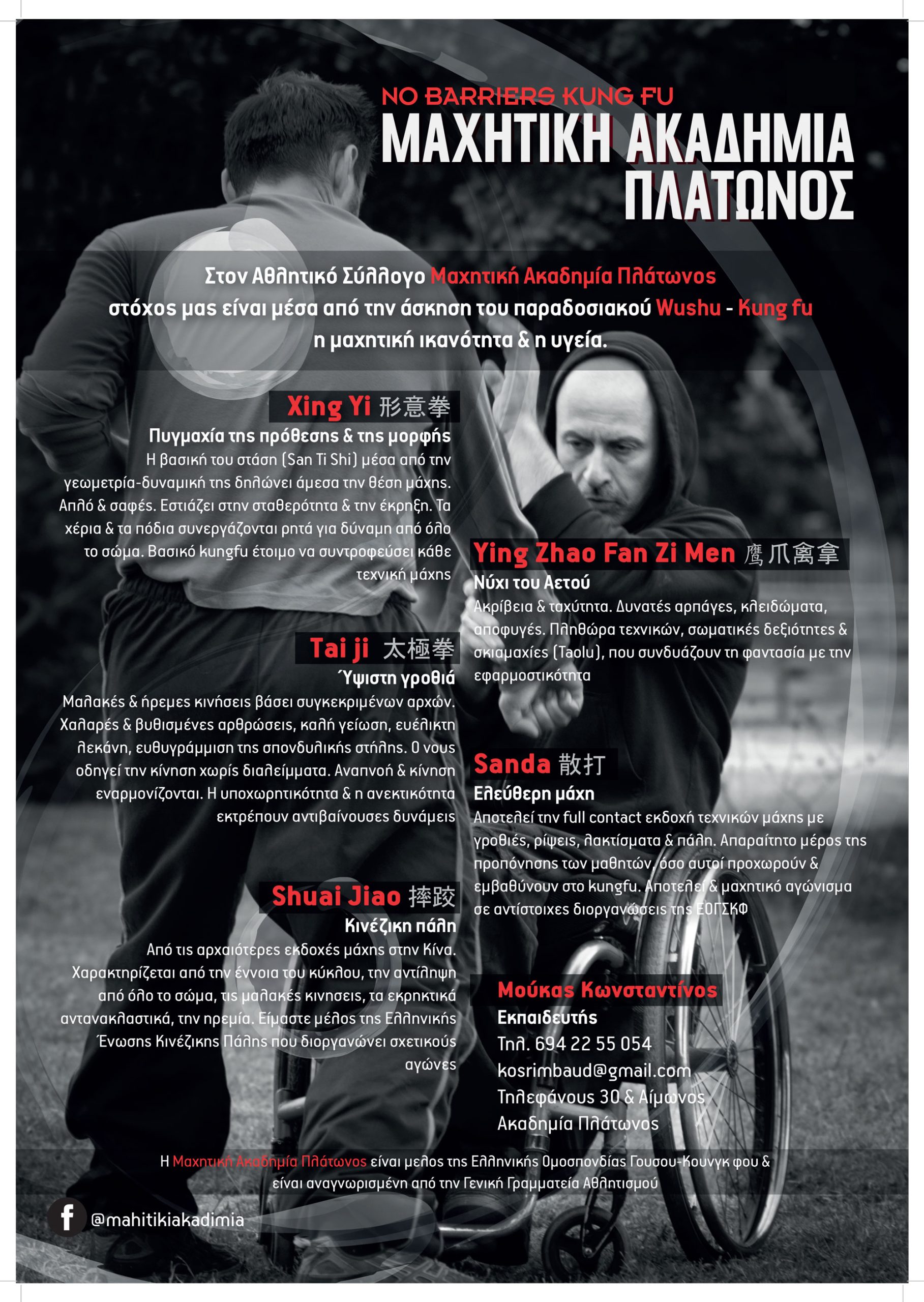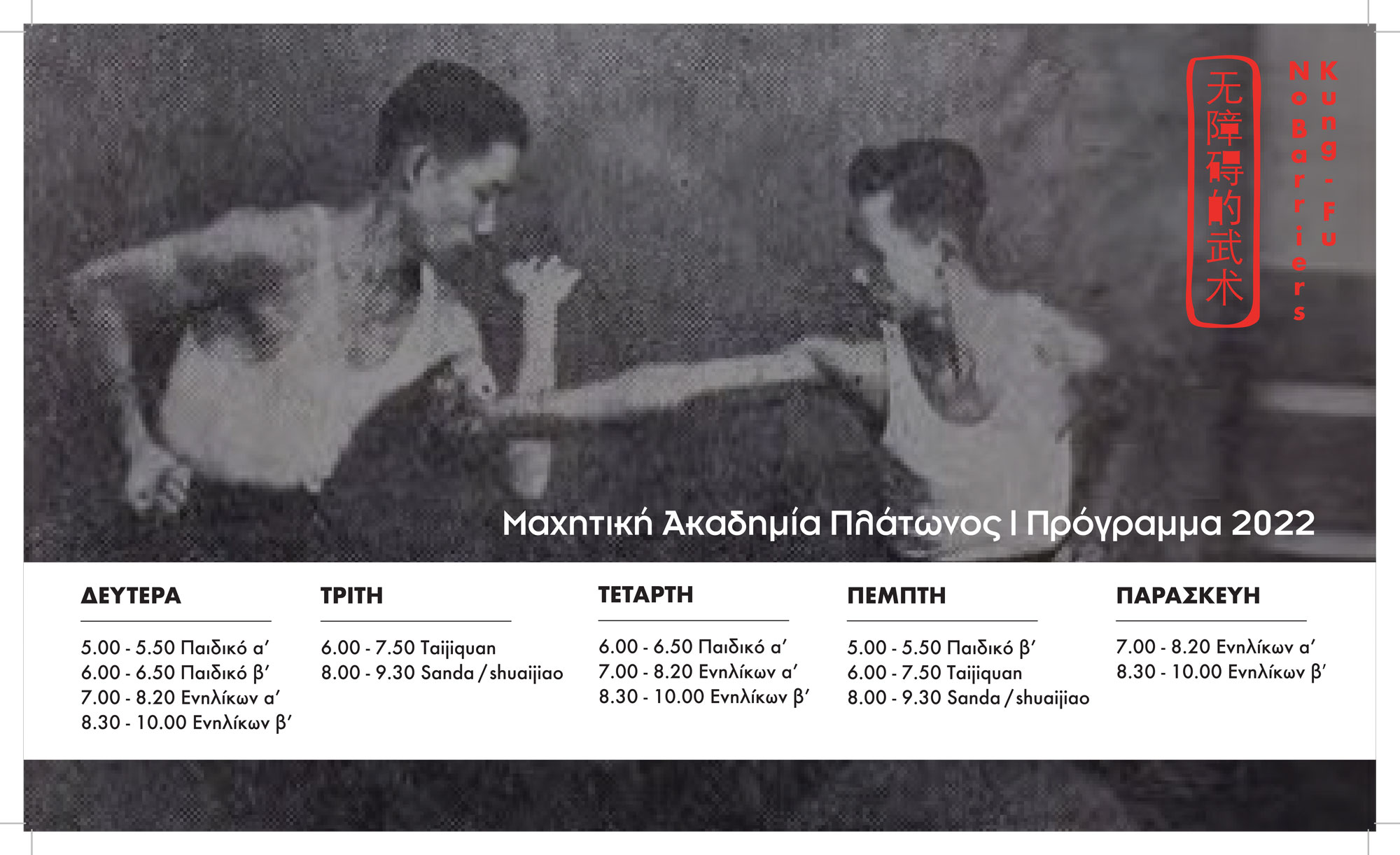
Kung Fu ( Gōngfū , 功夫 ) means skills that have been acquired through hard work over time. Wǔshù (武术) means martial arts.
Over the years, in the West these two have intertwined and ended up meaning the same thing, mainly due to the influence of the cinema of the 70s. Almost every film in that era, in the west and in Hong Kong, was forced to take the term Kung Fu and abusively denote the Chinese martial arts along with the philosophical, social and anthropological content they represent and encompass. Also, by extension, in our time, Wushu often means, or is equated with, modern competitive Wǔshù something quite distant from the Wǔshù/Kung Fu we are trying to practice here.
So, in the spirit of the romanticism of the 70s, for this strange thing that comes from the Far East with its mysterious power and philosophy, we too adopt the term Kung Fu in our own effort (nobarrierskungfu) to practice and focus on the potential (for body, soul and mind) of Chinese martial arts.
Nobarriers (Wú zhàng'ài 无运动的 ) means the unhindered, accessible to all, equal, not attached to hierarchies and protocols, able to include everyone. Its focus is to clarify the Taoist harmony with ourselves and our surroundings in a more western and everyday way. The term is often used in public transport to denote the unobstructed way of approaching points in cities for persons with disabilities or wheelchair users (see in German transportation "barrierlos" etc.). We decided to extend the phrase to the practice of Kung Fu, while at the same time Taoist principles and social reductions to today, centered on equality and inclusion, shape the method and manner.
So we end up with the overall phrase Nobarriers Kung Fu (Wú zhàng'ài de wǔshù , 无过的武术 ). It is about trying to practice Wǔshù/Kung Fu without excluding anyone as long as he respects his surroundings and himself, regardless of nation, color, race, build, age, disability. We try to use the mutual-teaching method, as more experienced students include during their exercise beginners and they all become part of the educational process. The participative way increases personal expression. After all, Kung Fu strives to empower those principles. The core principles of mechanics and some basic ideas hidden in combat techniques are given constantly.
It is intended that the practice of Kung Fu (something that requires conscription and a lot of effort and time) to be done in a non-coercive way, as often in our world something that requires conscription, respect, effort and time is identified with a method of imposition and even authoritarianism. The effort is continuous since the transmission of physical and spiritual knowledge is always identified with questions about hierarchy, authority, the relationship of the collective with the individual, etc. Also the process, the method and the journey for fighting ability and health that is sought here, is a difficult and arduous endeavor that juggles instincts of violence but also gentleness, alternation of tension and relaxation, softness and hardness, apparent strength and maneuvering techniques.
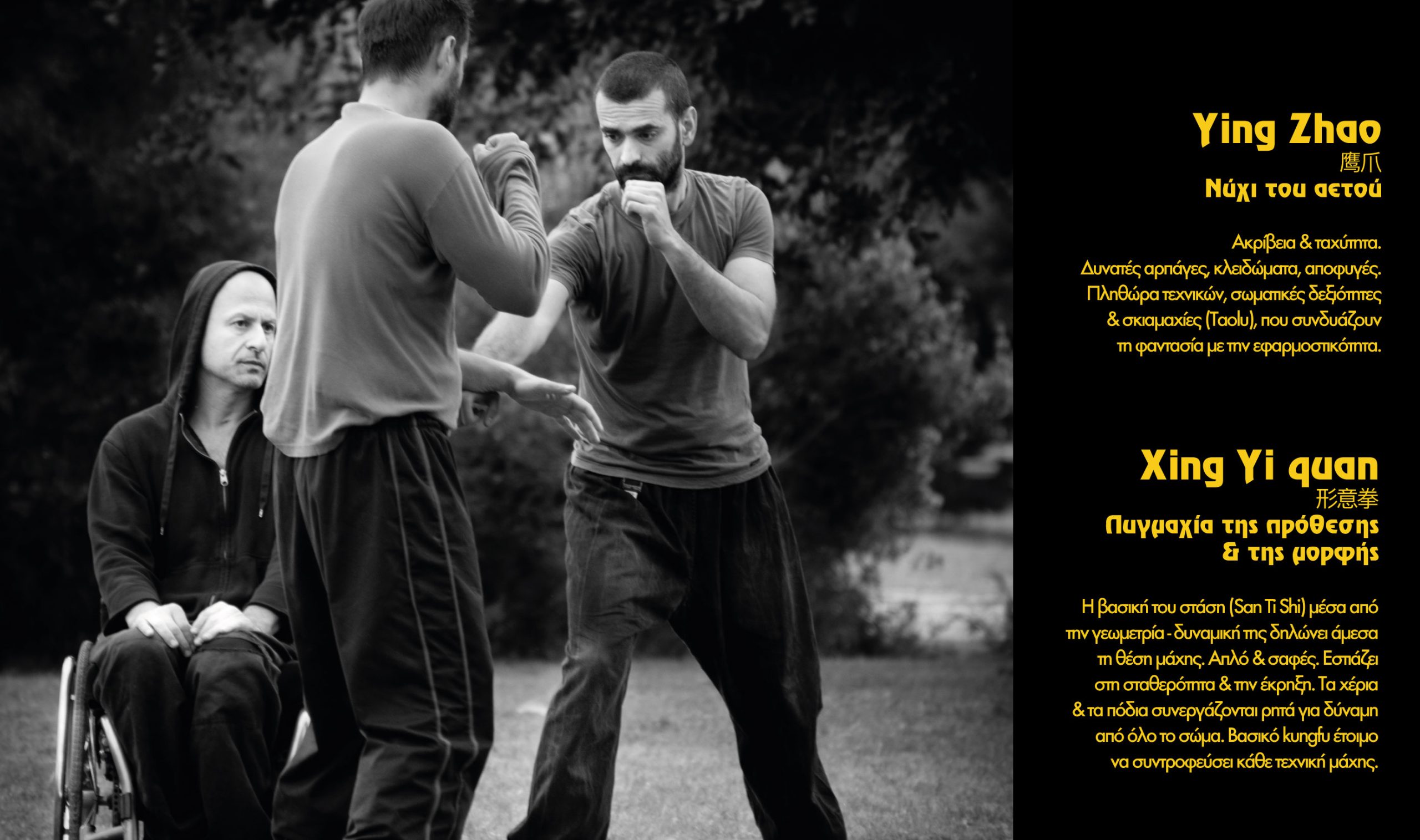
Ying Zhao & Xing Yi quan
Ying Zhao - Eagle's Claw: Accuracy and speed. Strong grabs, locks, dodges. Lots of techniques, physical skills and shadow fighting (Taolu) that combine imagination with practicality.
Xing Yi quan - Boxing of Intention and Form: Its basic stance (San Ti Shi) through its geometry and dynamics, directly states the fighting position. Simple and clear. Focuses on stability and explosiveness. Arms and legs work together explicitly for full body strength. Basic Kung Fu ready to accompany any fighting technique.
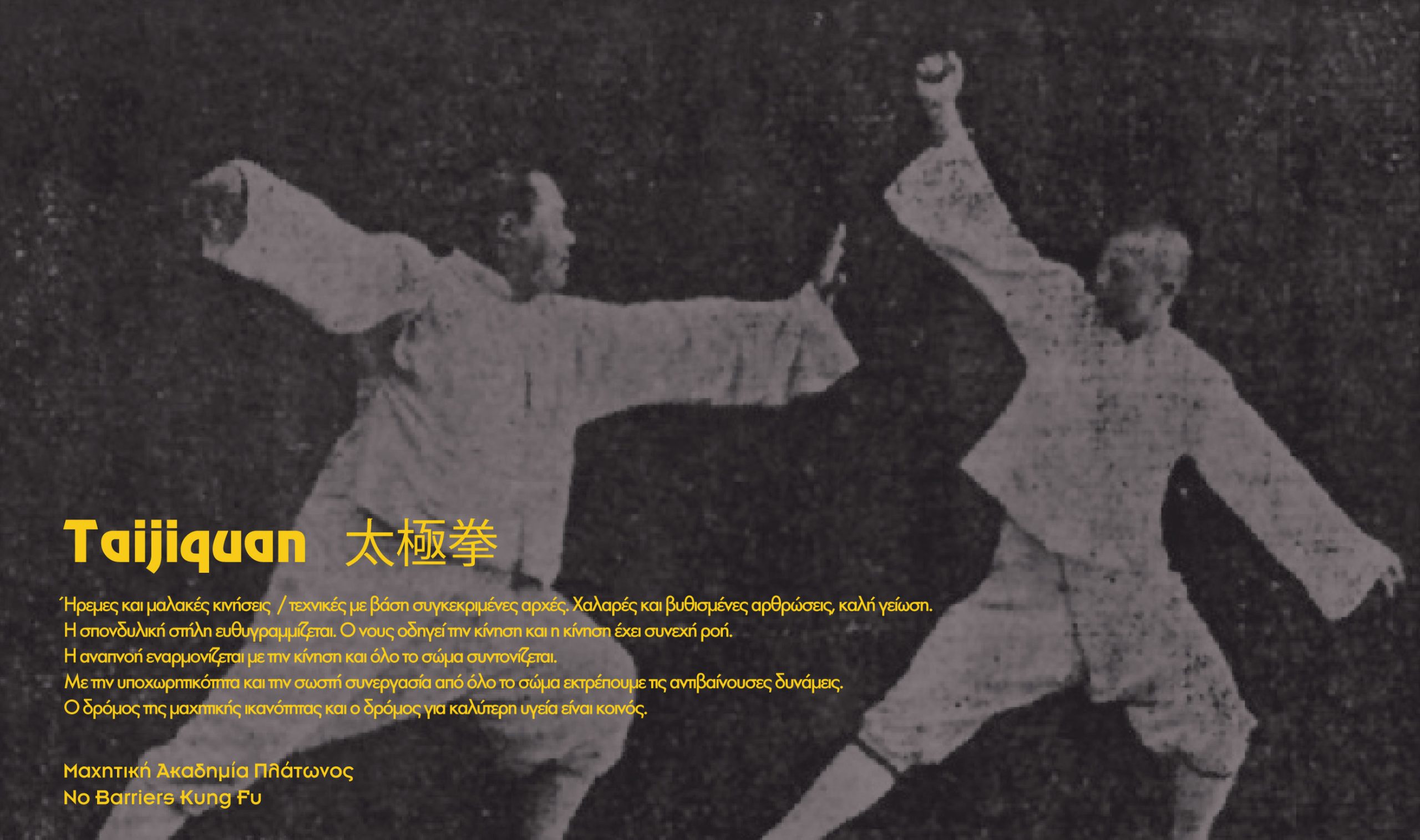
Taijiquan
Calm and soft movements / techniques based on specific principles. Loose and sunken joints, good grounding.
The spine aligns. Continuously flowing movement is driven by consciousness.
The breath harmonizes with the movement and the whole body is coordinated.
With yieldingness and proper cooperation from both body and mind, we are able to deflect conflicting forces.
Fighting ability and health improvement are reached following a shared path.

Sanda & Shuai jiao
Sanda means free fighting. It's a full contact style where we apply techniques from Kung Fu. It consists of punches, kicks, throws and grappling. It has specific rules, which take care of the safety of the athletes. It is a specific sport with matches, sparring and related events.
Shuai jiao means Chinese wrestling. One of the oldest martial arts in China and the world. The method uses circular movements, intense strengthening, whole body usage, assimilating the opponent's power and deflecting it. Related matches are made beyond the inclusion of fighting techniques in Sanda.
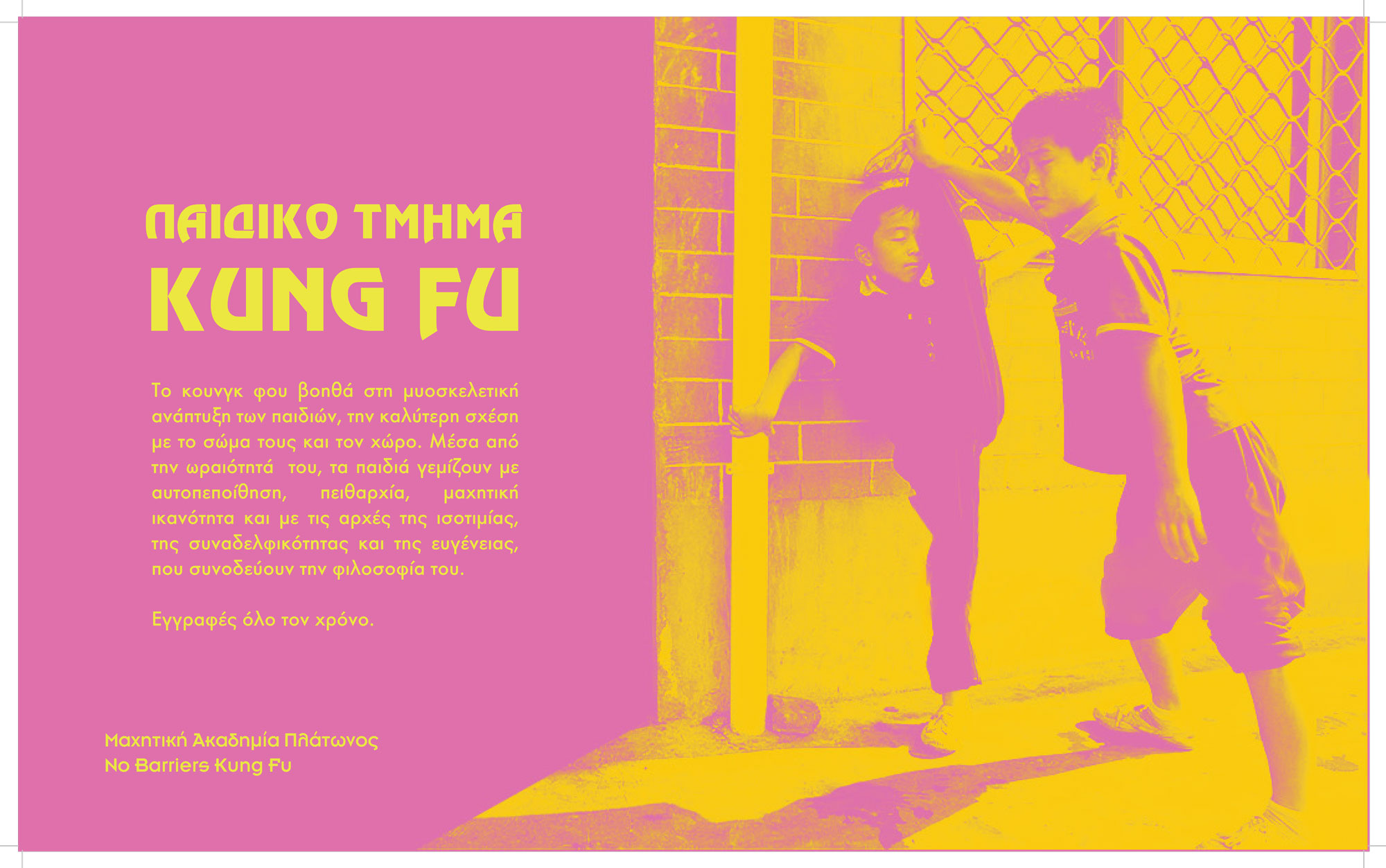
Children's Kung Fu
Kung Fu helps children's musculoskeletal development and assists them in developing a better relationship with their body and the space around them. Through its beauty, children are filled with self-confidence, discipline, fighting ability as well as the principles of equality, camaraderie and kindness that accompany its philosophy.